
Kintamani has always been defined by its views.
Mount Batur rising in the distance, Lake Batur stretching quietly below, it’s a landscape that naturally draws attention. But as the area continues to grow, so does the question of how it should be experienced.
Among the growing number of Kintamani hotels, a new perspective is beginning to emerge, one that values presence over spectacle.
This is where Desa Oculus begins.
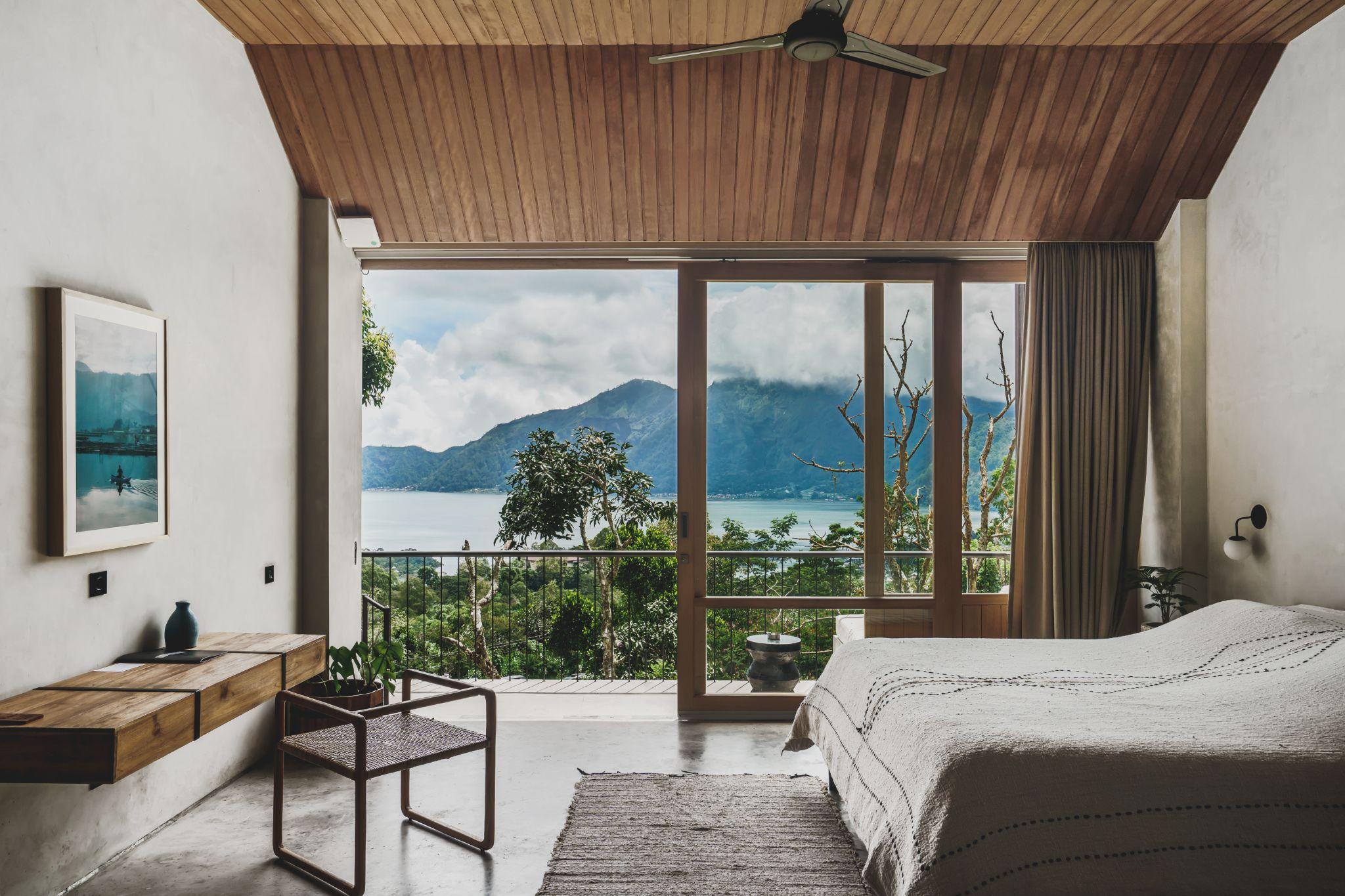
A Different Perspective on Kintamani Hotels
Most Kintamani hotels are built around a single idea: to capture the scenery.
Large windows, elevated viewpoints, uninterrupted panoramas. The landscape becomes something to be observed, framed, displayed, and often amplified.
Desa Oculus takes a different approach.
Rather than competing with its surroundings, Desa Oculus is designed to sit within them. The architecture doesn’t push outward. It settles in.
Here, the experience is less about looking at Kintamani, and more about feeling part of it, something not all Kintamani hotels manage to achieve.
Architecture That Works With the Land
At Desa Oculus, design is not decorative, it is intentional.
Drawing from Bali Aga traditions and sacred spatial principles, the layout reflects a deeper understanding of balance. Structures are positioned with awareness, allowing the natural contours of the caldera to guide the experience.
Views of Mount Batur and Lake Batur are not forced into focus. They appear gradually, framed through movement, through space, through stillness.
This approach sets it apart from many Kintamani hotels that prioritize visibility over experience.
Rooms Designed for Stillness
The accommodations at Desa Oculus follow the same philosophy.
There is no attempt to overwhelm. Instead, each room is shaped to create a sense of calm:
- spacious suites opening toward mountain and lake views
- caldera-edge rooms that emphasize openness and quiet
- minimalist interiors that remove distraction rather than add to it
It’s a design that encourages pause, something increasingly rare, even among newer Kintamani hotels.
Dining That Reflects Its Surroundings
Food at Desa Oculus is approached with the same sense of place.
As both a hotel and a Kintamani restaurant destination, it focuses on locally sourced, seasonal ingredients that reflect the surrounding land.
Dining spaces range from relaxed to more refined, but all are designed to complement the environment. There is no separation between what’s on the plate and where you are.
It’s a quieter approach to dining, one that feels grounded, rather than performative.
Wellness and the Kintamani Spa Experience
Wellness at Desa Oculus is not treated as an add-on.
It is part of the overall experience.
As a Kintamani spa destination, it draws from traditional Balinese healing practices, focusing on balance and restoration rather than indulgence. Treatments are shaped by simplicity, intention, and connection to the environment.
Combined with the cool mountain air, the Kintamani spa experience here feels naturally immersive, less about escape, and more about returning to a sense of equilibrium.
More Than a Stay
What defines Desa Oculus is not a single feature, but a consistency of intention.
Across architecture, rooms, dining, and wellness, everything follows the same principle: to create a space that feels aligned with its surroundings.
Among Kintamani hotels, it offers something different, an experience that is not driven by excess, but by clarity.
Final Thought
As Kintamani continues to evolve, so does the expectation of what a stay should offer.
The focus is shifting, from simply viewing the landscape, to experiencing it more meaningfully.
Among the many Kintamani hotels, Desa Oculus represents that shift.
And in doing so, it offers something quieter, but ultimately more lasting.